Tools for Endings
The Decelerator’s library of Endings Tools is available free to you and your organisation.
The tools are compiled from the insights and learnings gained through hundreds of hours of support to organisations who were anticipating, designing or delivering endings.
We hope they will help you design, deliver and advocate for funding for better endings in your organisation.
These tools will be updated and added to regularly. So if you have a story, resource or experience of an ending that you think could be transformed into a learning tool for others considering a similar ending, we’d love to hear from you.
Tools for organisational closure
Sensing An Ending is a step by step guide to anticipating, designing and undertaking a nonprofit organisational closure or merger. When we published it via Stewarding Loss in 2021, we believe it was the first resource of its kind to weave together both the practical and the emotional considerations of a closure or merger. This was a particularly crucial resource to compile in 2020 as it responded to the belief across civil society that countless organisations were facing hardship and possible closure as a result of the impacts of Covid-19.
This worksheet is designed to support staff, trustees, teams or communities to explore the idea of an ending - specifically in this instance, a possible organisational closure. However the prompts in here could easily be used to aid the consideration of other endings in organisations - eg. a transition of leadership, the end of a programme or project cycle, or the end of a partnership.
This worksheet is a bitesize introductory worksheet that sets the scene for the Sensing An Ending Toolkit: A toolkit for nonprofit leaders to help decide, design and deliver better organisational endings which Stewarding Loss published in 2021.
Are you wondering what's involved in closing your organisation - perhaps because you want to understand closure as one possible pathway for your future? Or because you are at the point of needing to put a plan in place?
Many leaders tell us they've never done this before and feel unprepared. It can feel daunting to compile a plan, especially when time is short. This guide offers practical information and signposts support to help you design a closure that meets regulatory requirements while honouring your organisation's legacy, impact, and relationships.
When a charity can't meet its debts, trustees need clear information fast. This guide explains insolvency processes, your legal duties, available options, and where to find specialist advice - helping you navigate what many people have told us feels like one of the most challenging situations in charity leadership. The Decelerator is not an insolvency practitioner and we cannot give you insolvency advice. But we can signpost you to trusted specialists and offer human, supportive help as you go through this.
This is a quick, practical guide for organisations anticipating, planning or delivering an ending, and asking themselves what they can do to maximise the support (financial or otherwise) from their networks of funders.
In November 2022, after 10 years, Year Here stopped delivering social innovation Fellowships and all operations ceased.
The case study. is designed to share the ‘how’ of ending Year Here’s Fellowship and operations. Why? Because leading the ending of something is one of the most mysterious undertakings everyone involved had ever embarked on. They want to shed light on their experience so that if you find yourself considering closure, you can gain a sense of what it will involve, how it might feel and how you can do it as well as possible.
‘Legacy work’ can be broadly defined as the communications and programming activities delivered by a closing organisation seeking to ensure their learnings and impact have an enduring effect on the sectors, communities and beneficiaries they served. This document contains a few examples from legacy work The Decelerator has supported.
Leading teams through endings
This worksheet is designed to guide you through the process of navigating your exit from an organisation. It might be especially useful for individuals who find themselves looking to start a new chapter as a result of an organisational closure, wind-down, merger, project conclusion, or another form of transition. However, it might be equally valuable for anyone approaching an ending, regardless of the circumstances.
Across more hundreds of conversations through The Decelerator Hotline, a pattern stands out: the ritual or marker event is almost always "the thing that fell off the list." The reasons are understandable: the emotions involved, potential awkwardness, lack of good examples, and the pressure of seemingly more urgent tasks like legal and HR matters. But rituals that mark moments matter. They help people process change, honour what was, and transition to what comes next.
This guide draws on rare examples where organisations did create meaningful rituals for their endings or transitions.
Tools for leadership succession
A guide to support Chairs, Trustees and Senior Teams lead the design and delivery of great leadership succession and transition
Beginning With The End In Mind?
The Decelerator helps organisations confidently and critically explore their organisation's lifespan and purpose. So how are we applying these ideas to our own journey?
Archetypes for Endings
Over hundreds of conversations and plenty of honest reflection ourselves, we’ve noticed familiar patterns in how everyone - leaders, boards, teams, funding colleagues, volunteers and beyond - respond to endings and transitions. The truth is, we see these same patterns in ourselves.
We’ve used these archetypes to spark reflection on Hotline calls, to open honest dialogue in workshops, and to help teams find compassion amid complexity. Perhaps they’ll do the same for you.
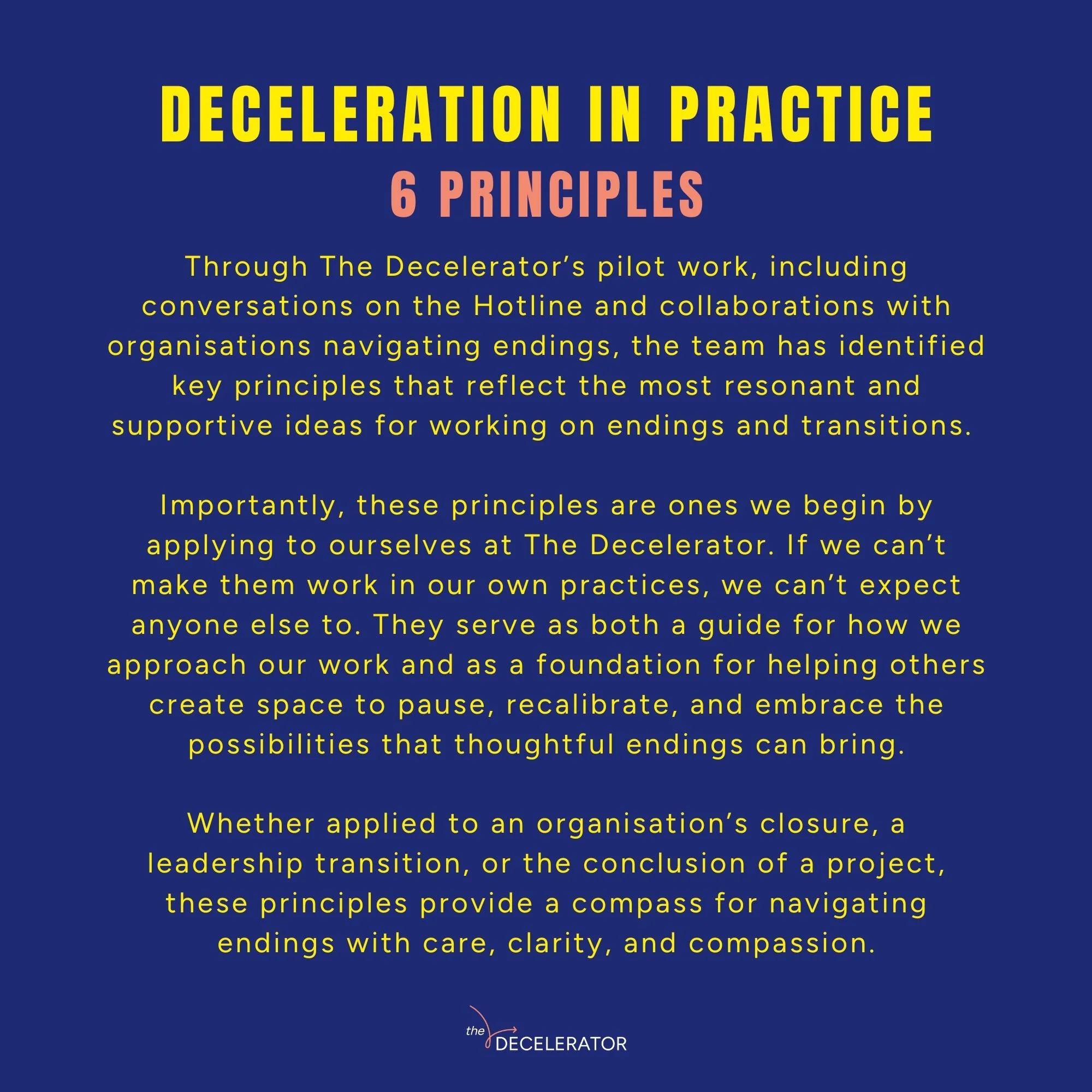
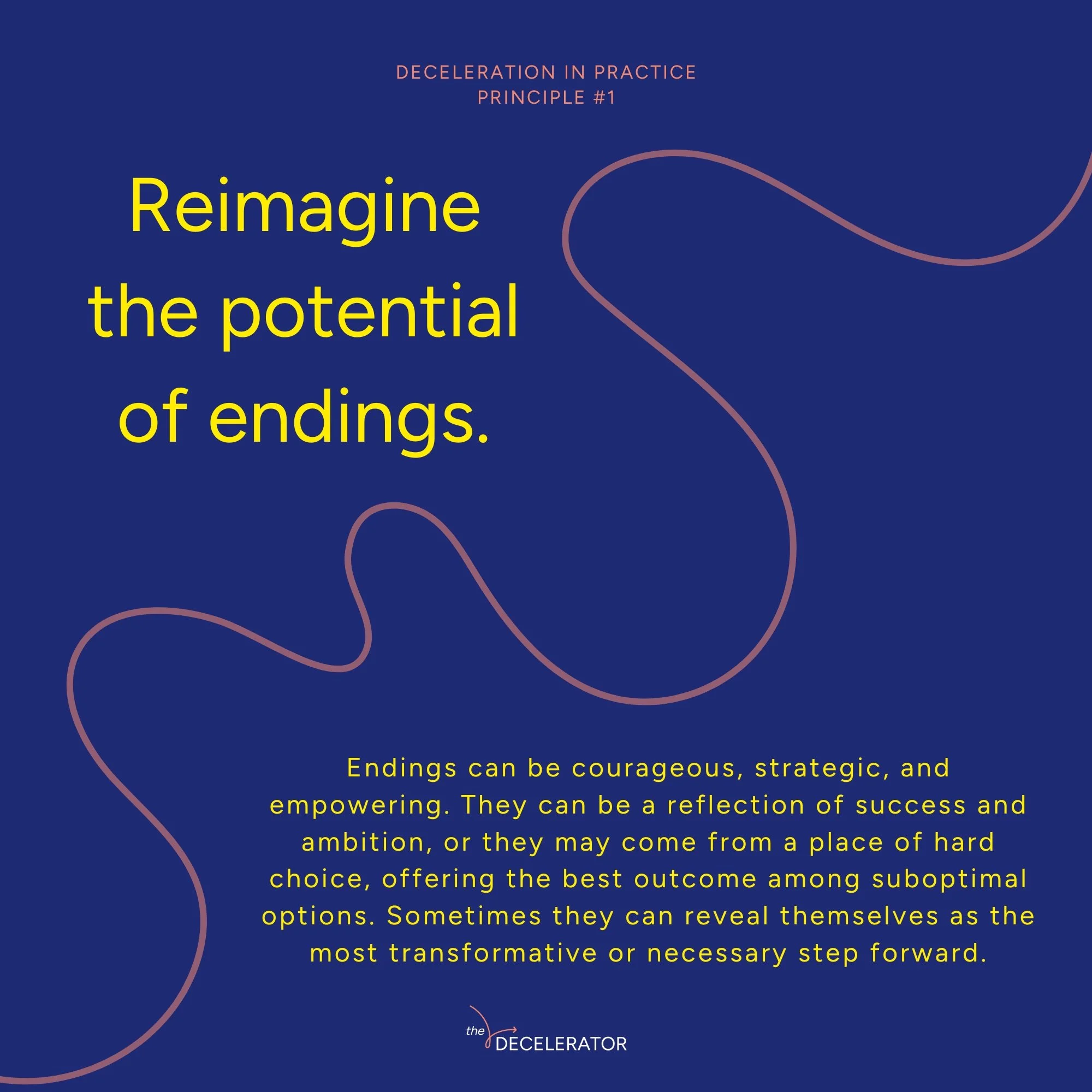
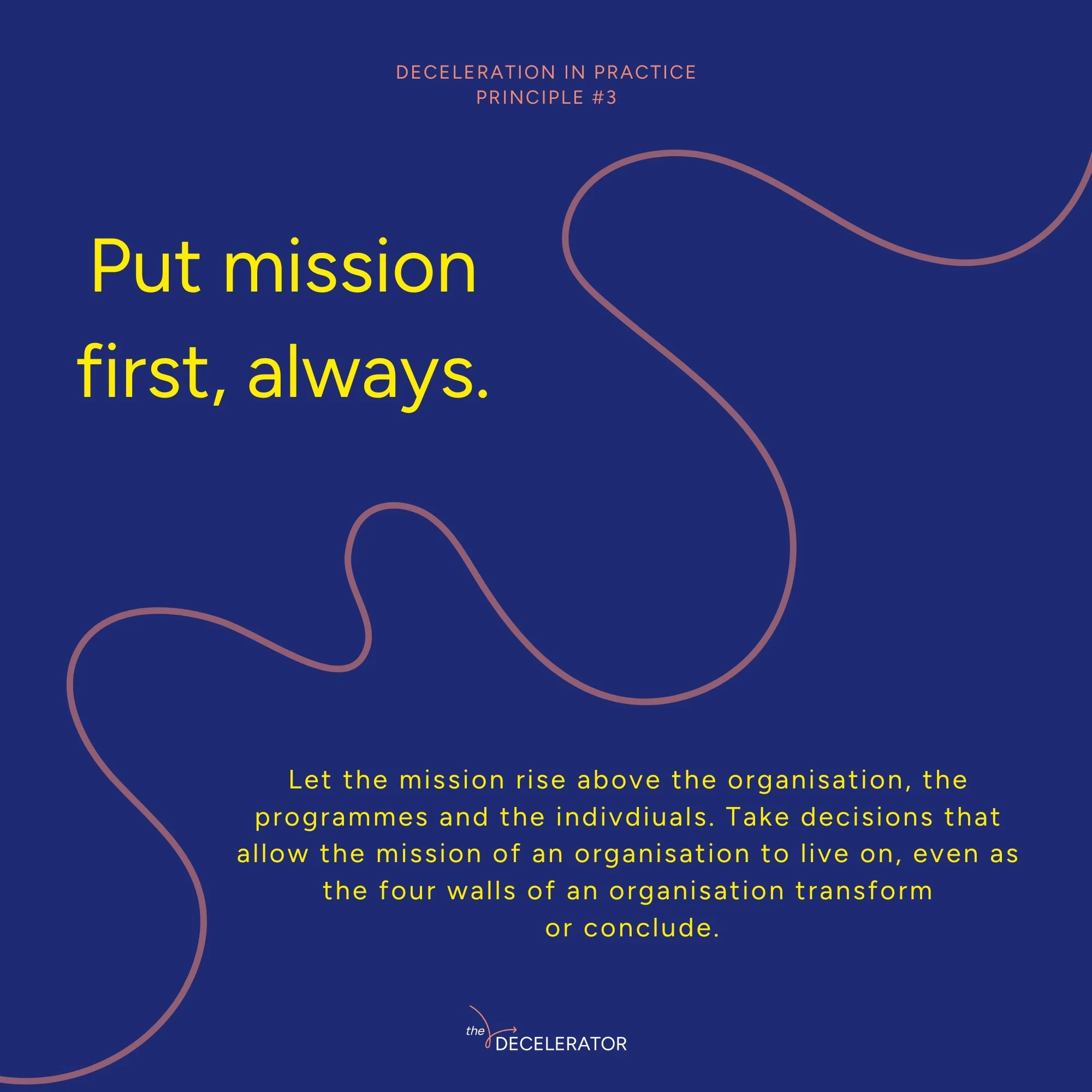
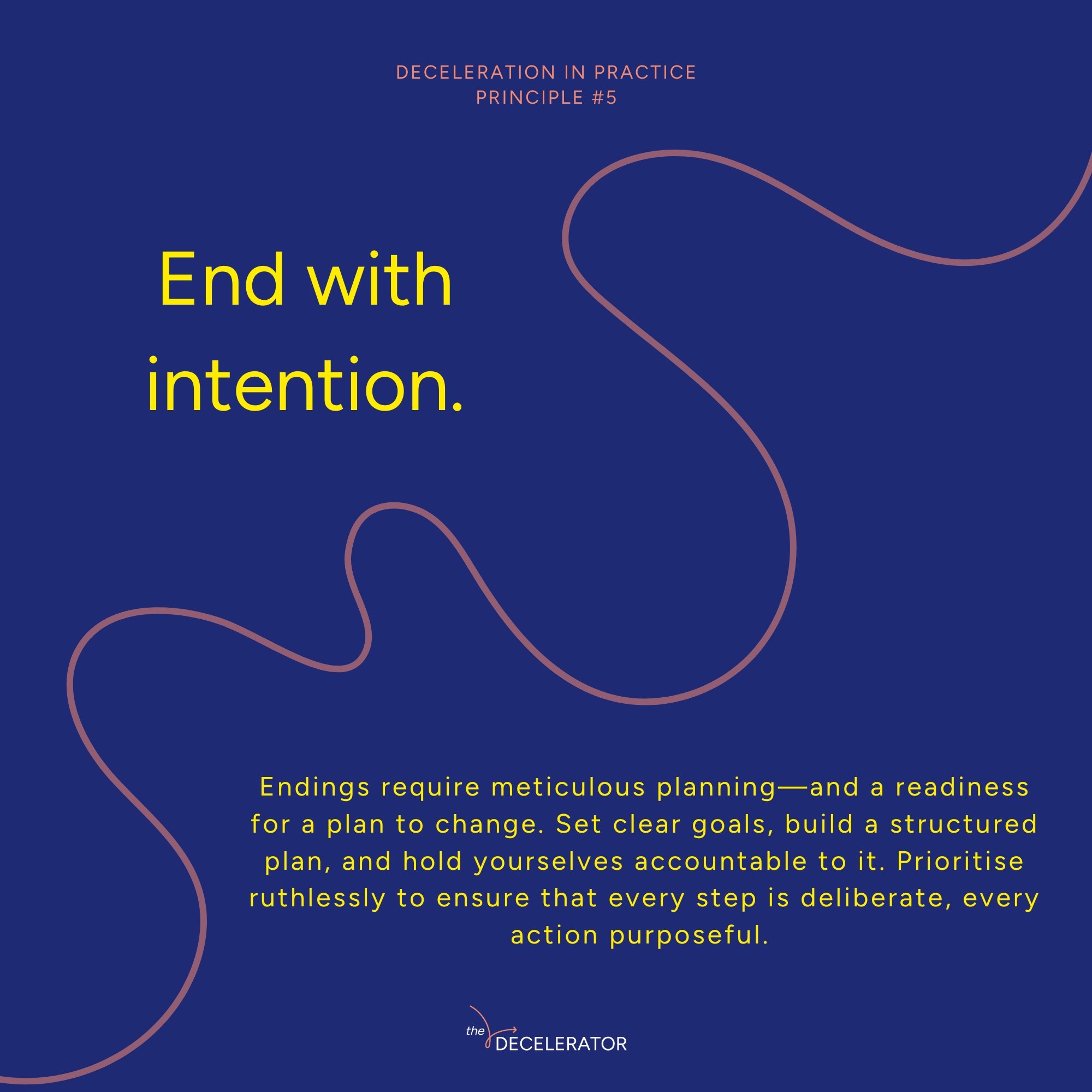
Principles For Deceleration